Blog
Hockey arguments, priced in goals. The model shows its work — including what it gets wrong.
The Faceoff Tool
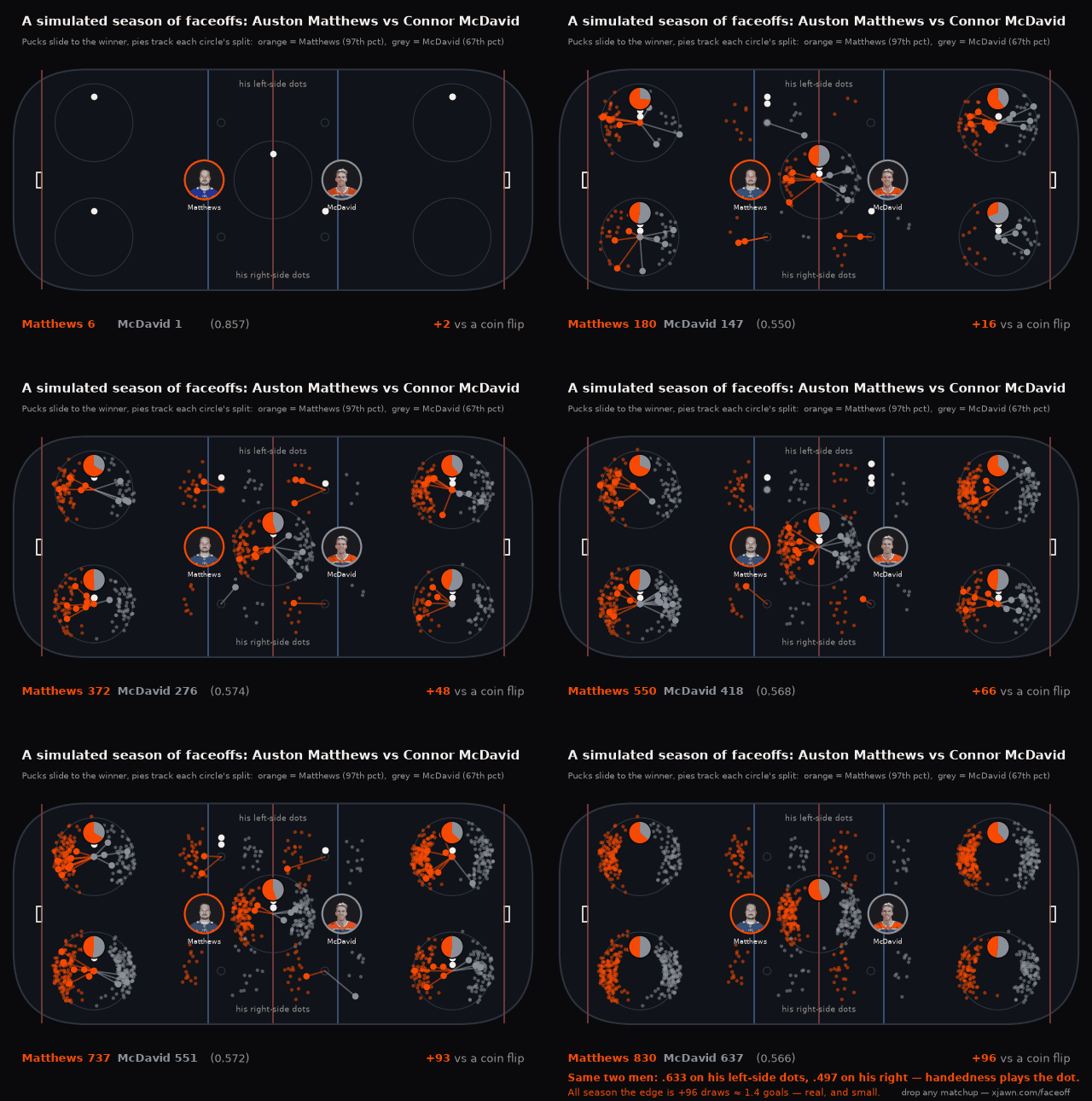
Simulate any NHL faceoff: pick two takers, click a dot, drop the puck. The same model behind the faceoff posts -- 1.2 million draws -- with every term of the prediction shown, and what winning the draw is actually worth.
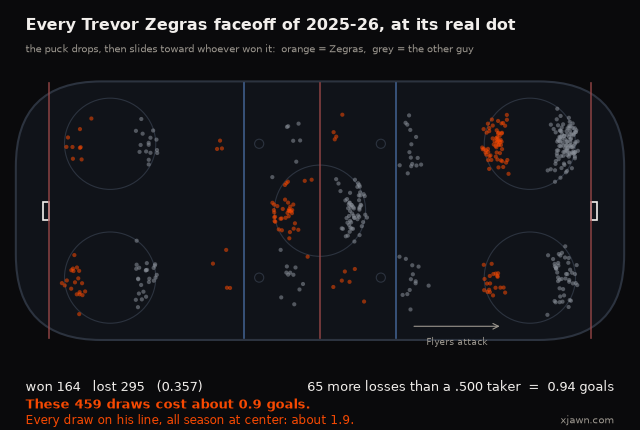
Zegras at center: what his faceoffs would actually cost
He won 36% of his draws, worst on the team and below the worst regular taker in the league. Priced at what a won faceoff is worth, a full season of him taking every draw at center costs about two goals — a third of a win — and the bench already hedges half of it.
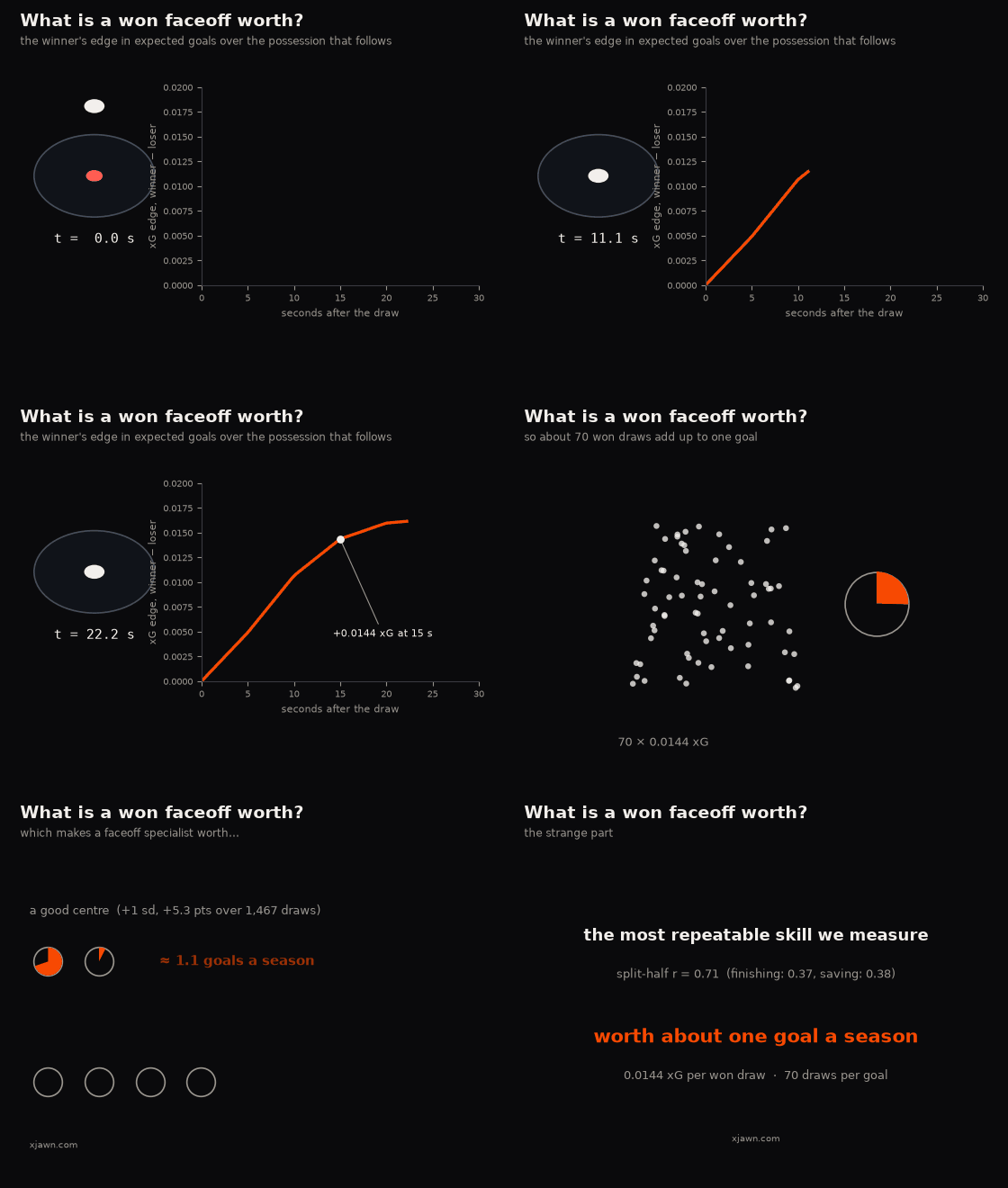
What is a faceoff worth?
0.0144 expected goals per won draw, measured with the model's own win probability standing in for a coin toss. Seventy extra wins make a goal, an elite center is worth about one a season — and faceoff ability is the most repeatable skill we have ever measured. Both things are true.
Model v3: the cascade
The xG model now asks three questions about every shot attempt: does it get through, does it hit the net, does it go in? Each stage gets its own player ratings, and that is how shot blocking became a number here.
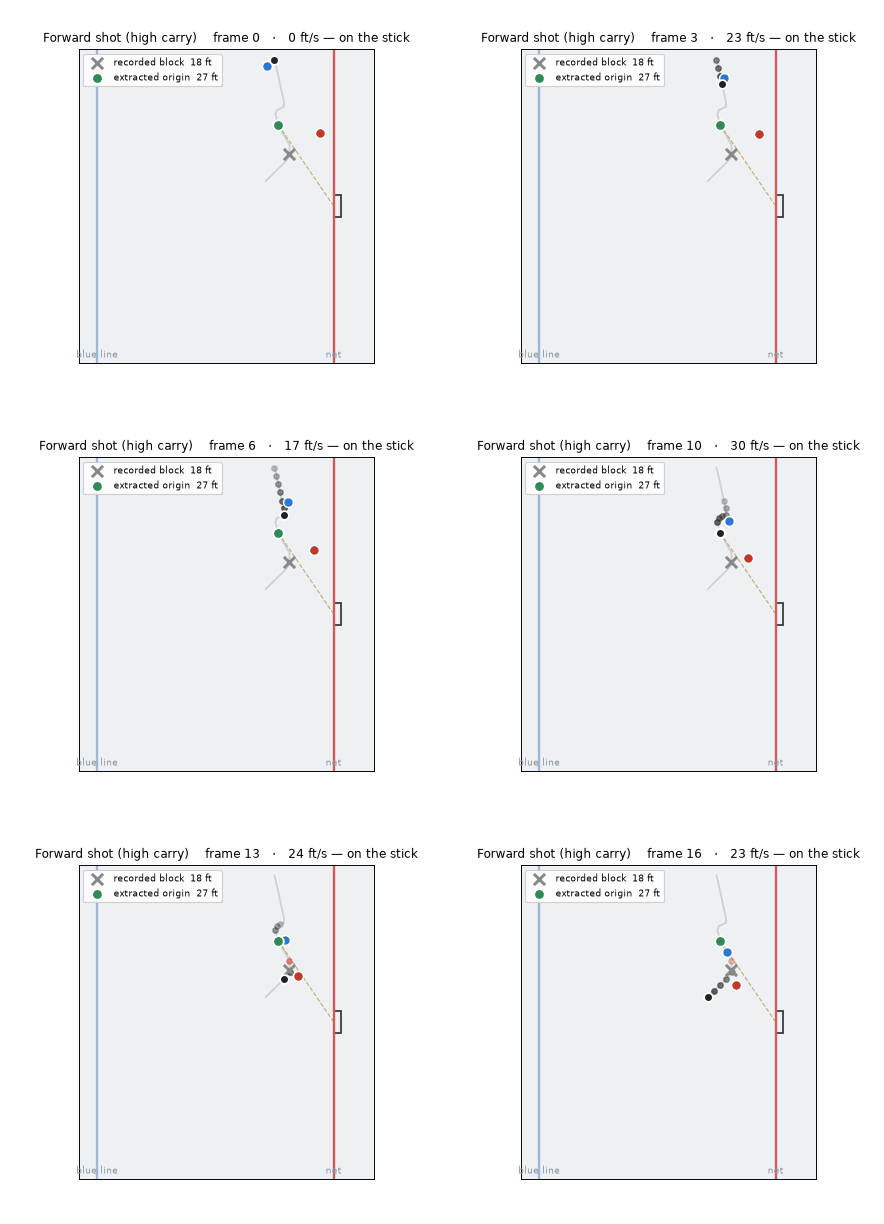
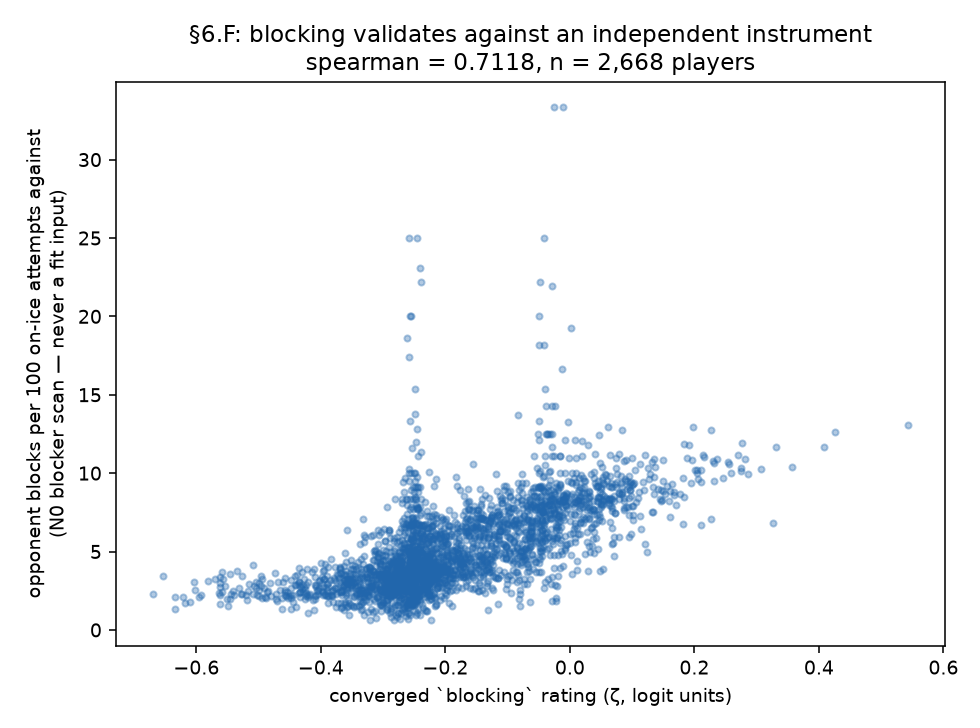
Blocked shots, part 3: blocking is a skill, and it has a number
The series finale. The model asks "does it get through?" as its own question, finds a skill that repeats like goaltending — and converts it to goals: about one a season for the league's best, owned by exactly the players the shot-attempt ledger punishes.
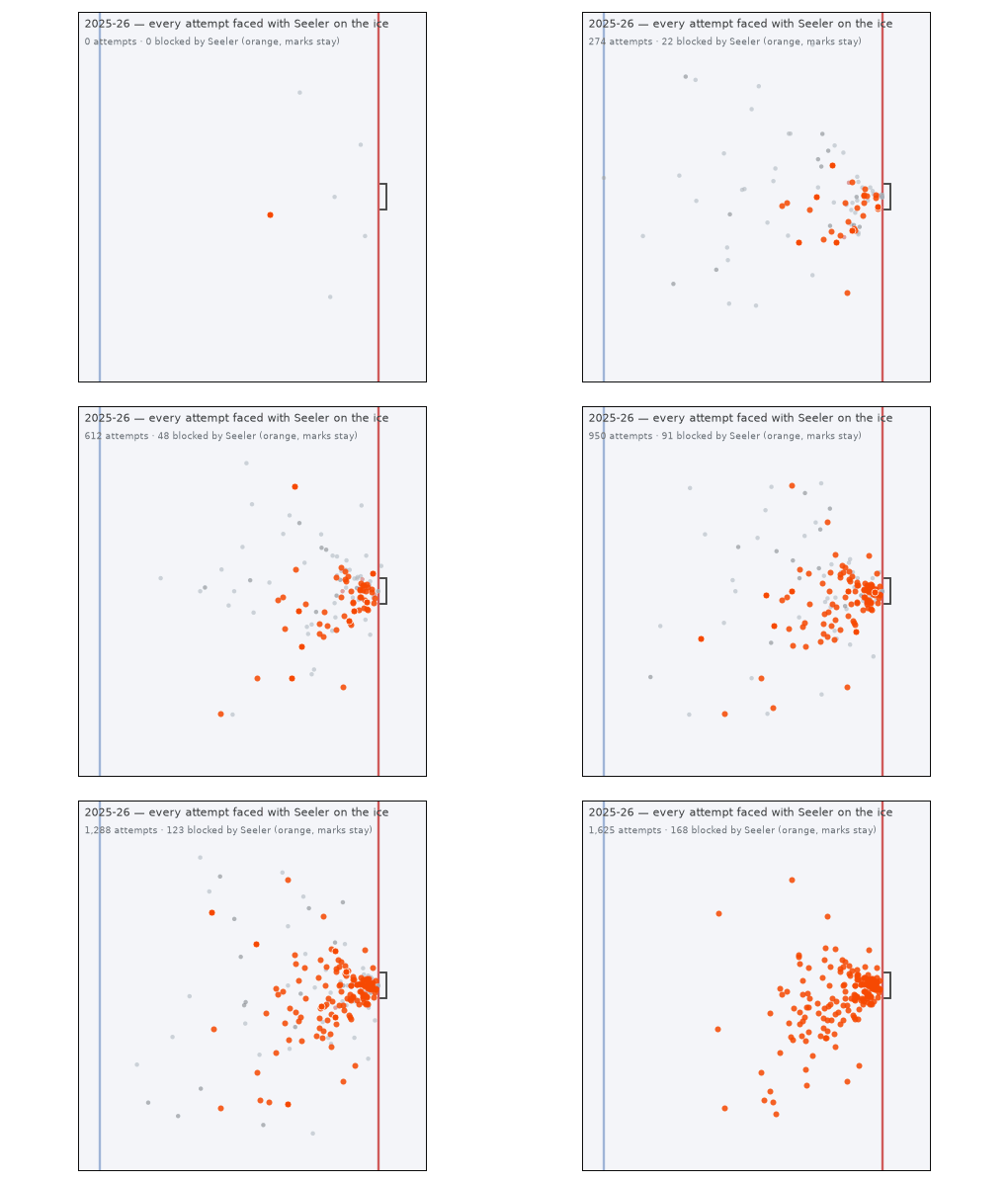
Nick Seeler: good "defensive defensemen" are real, they're just rare
The stats have liked Seeler for a while; the thing he's famous for went unpriced. Price the blocking and he's a top-20 defensive defenseman — and the league's most extreme blocking specialist turns out to be a perfectly sound even-strength defender, exactly where critics predict drowning.
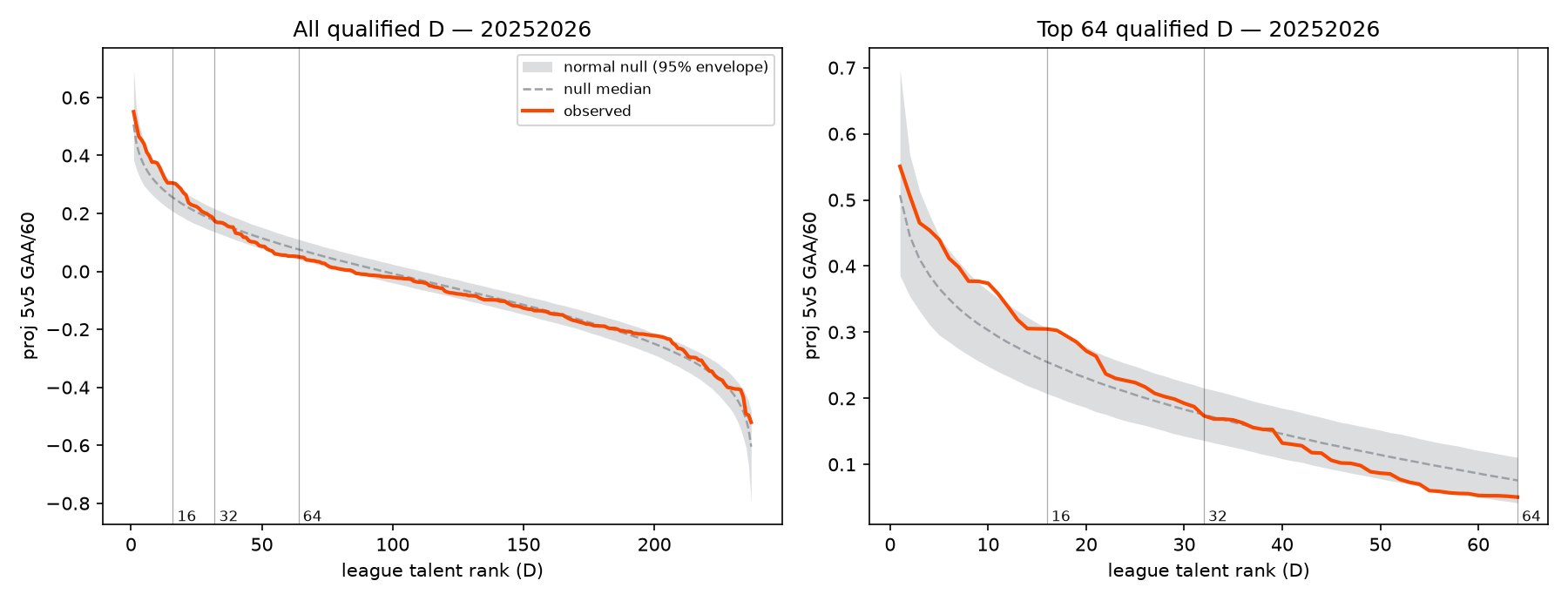
What is a 1D? The league's shape says it's a job, not a tier
Everyone sees the steep drop after the top defensemen and calls it a tier. A smooth, tier-free league produces that exact drop for free — and split into creating and suppressing chances, both halves of the job are slopes with no rung on them.
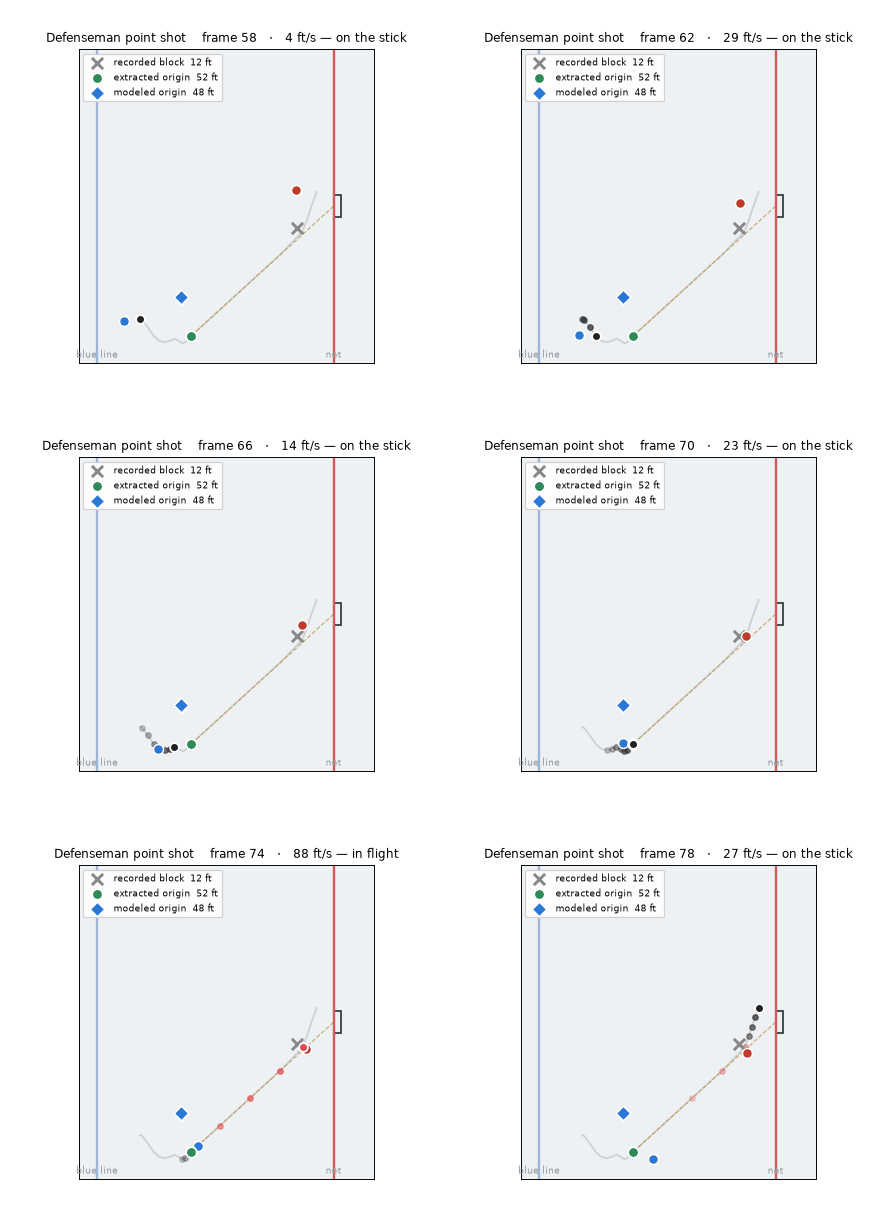
Blocked shots, part 2: putting them back where they came from
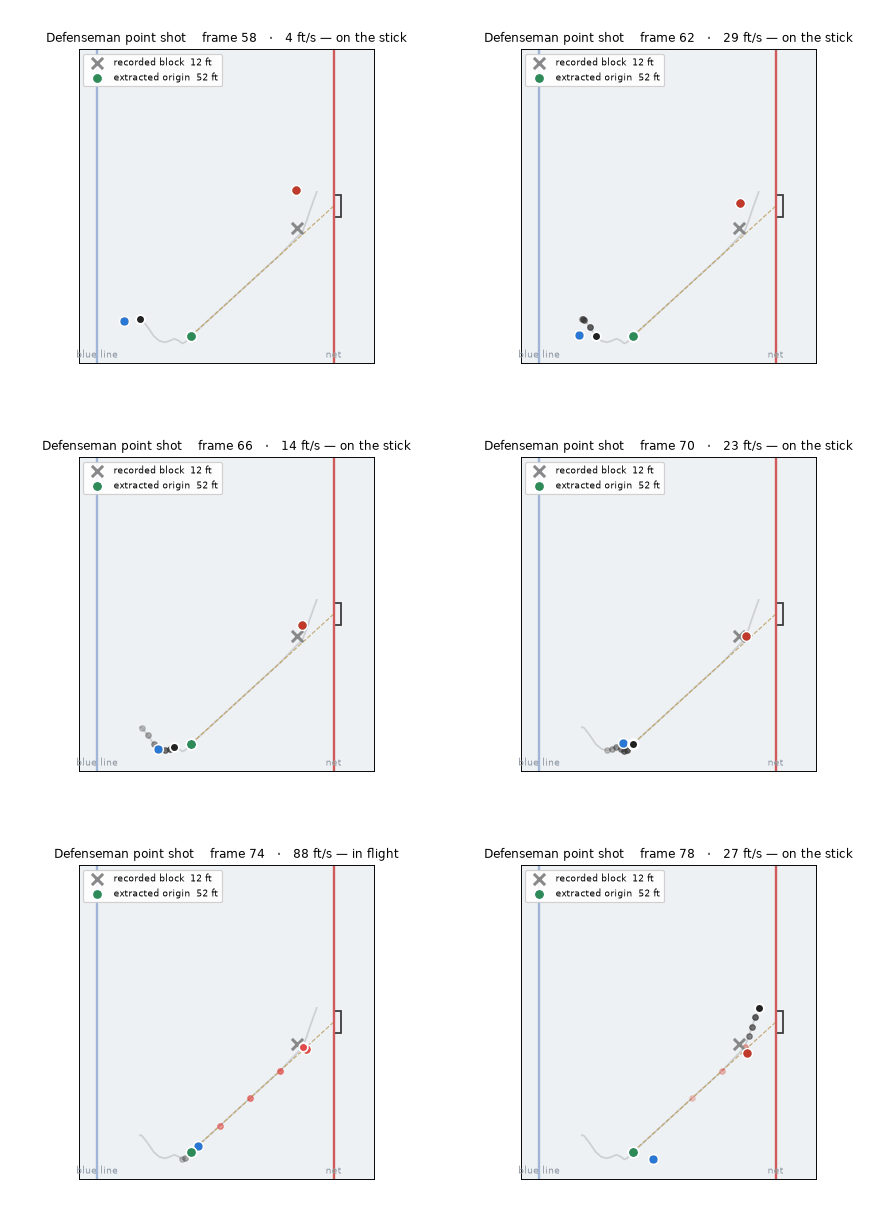
The NHL records a blocked shot where it died, not where it was born. How we recover the true origin from Edge tracking — and the two ways the fix fooled us before it worked.
Blocked shots, part 1: the case for the shot that never arrived
A quarter of all shot attempts never reach the net, and most xG models throw them away. Why they belong — the shooter's-eye argument — and the data problem that keeps everyone else from using them.
Believe the homecoming? What a 37-year-old legend has left
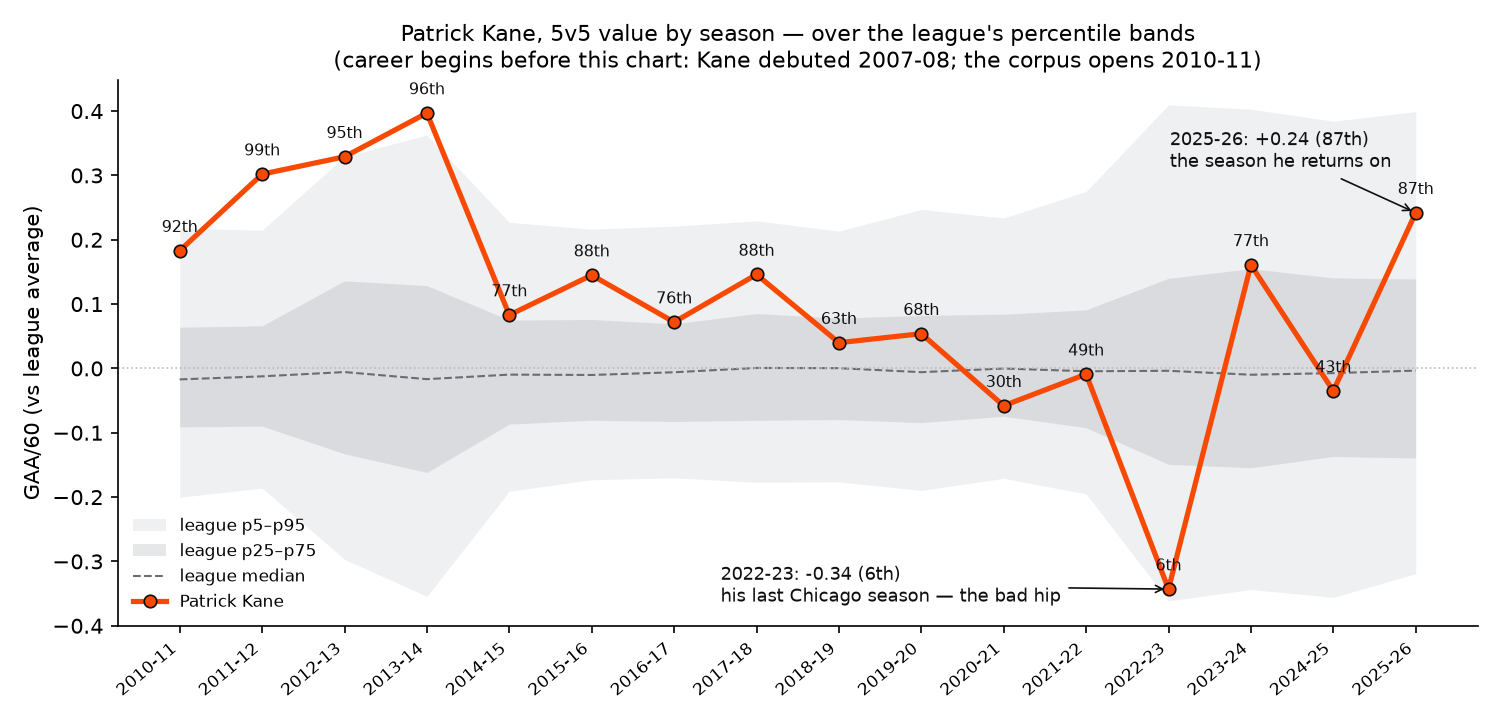
Patrick Kane is going home to Chicago at 37 on a two-year, $16M bet. Our aging curves say finishing only declines — and Kane's profile is the rare one where that's the good news.
Believe the breakout? What a single season is actually worth
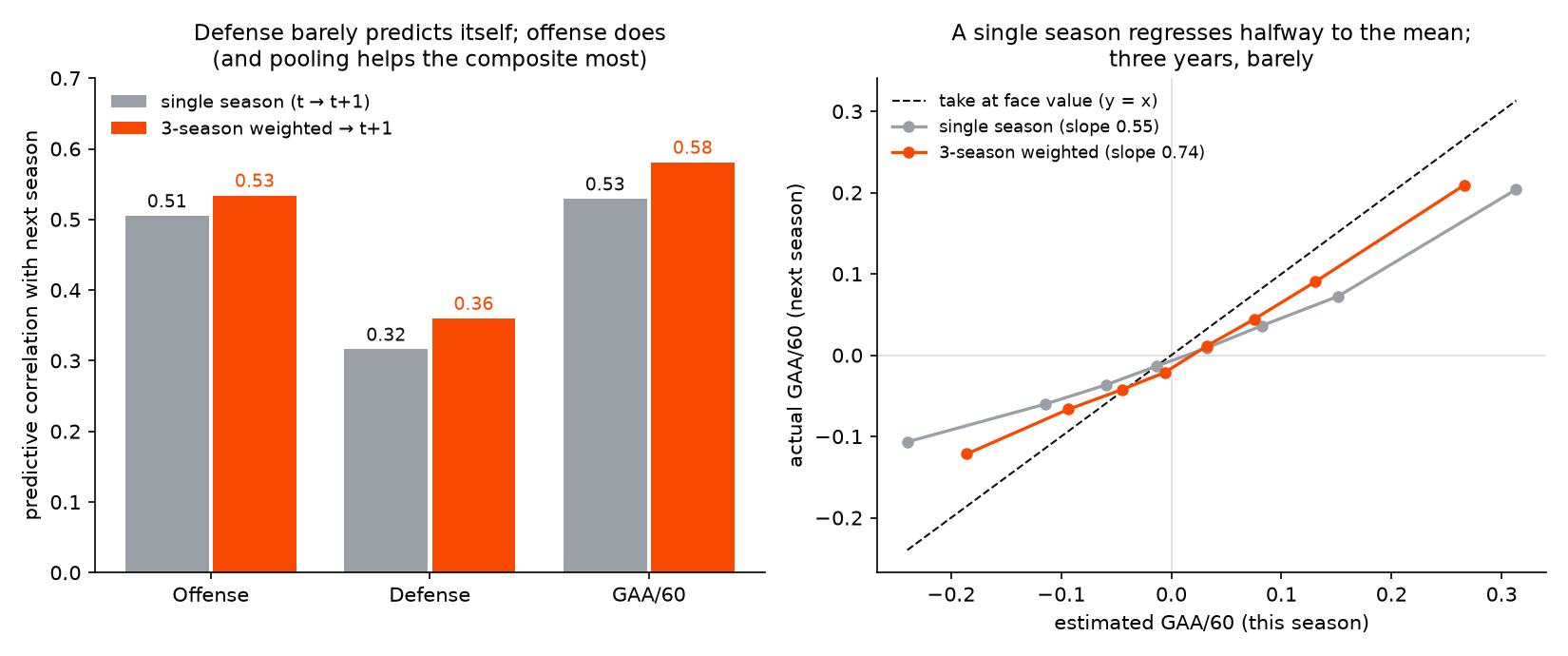
The Flyers just made Jamie Drysdale their highest-paid defenseman on a four-year, $26M bet. Our model on whether it's a good one — a real defensive step, and the one-season noise that keeps it a bet.
Where does Trevor Zegras belong? Part 3: the answer is that there isn't one
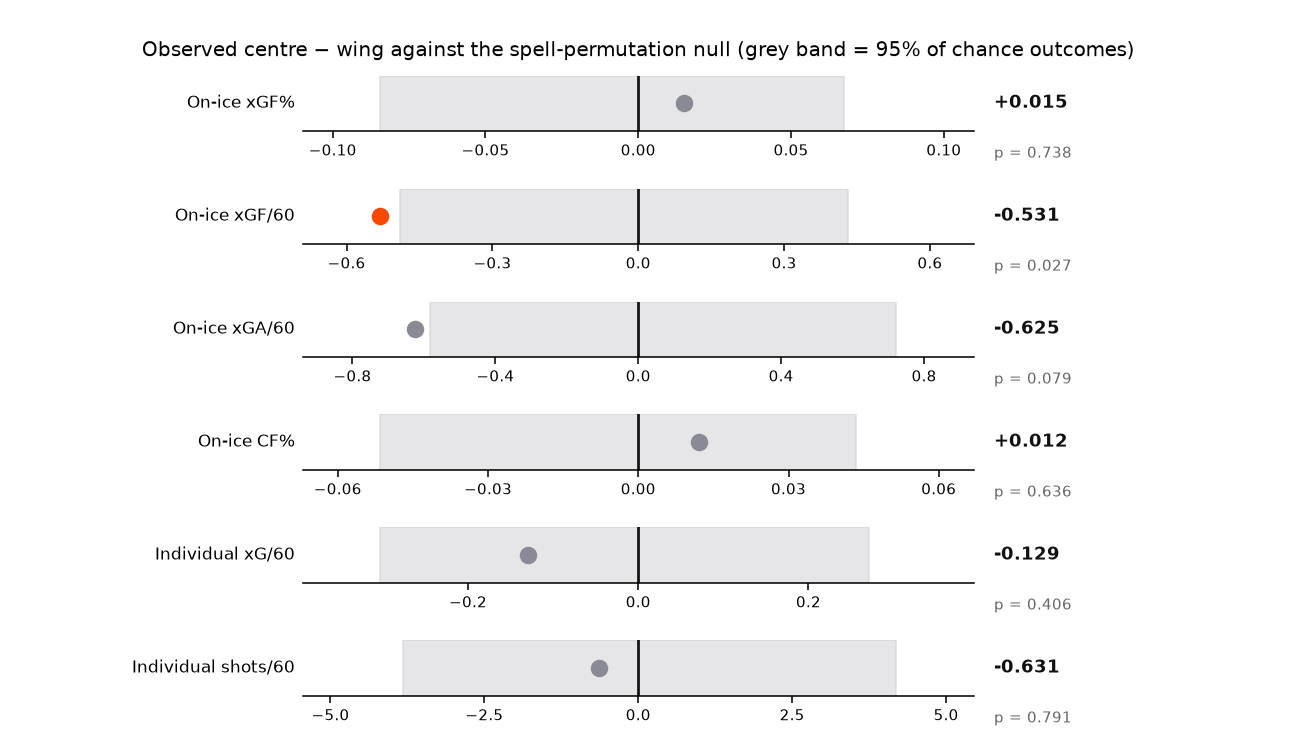
The performance split, pre-registered before it was run — and the arithmetic showing that 60% of the NHL's forwards fit inside our margin of error. One season cannot answer this, for anyone.
Where does Trevor Zegras belong? Part 2: does the job change?
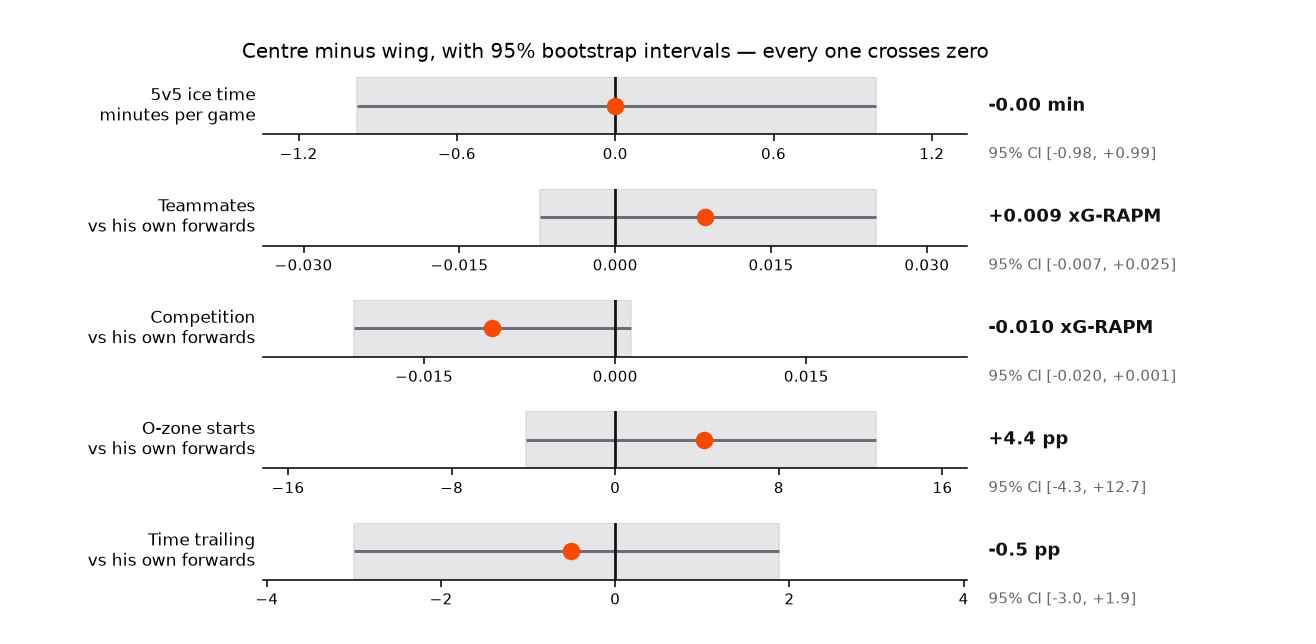
Before asking whether he's better at centre, ask whether centre is a different job. Ice time, teammates, competition, zone starts, score state — and the control that turns a 10-point finding into half a point.
Where does Trevor Zegras belong? Part 1: where he actually played
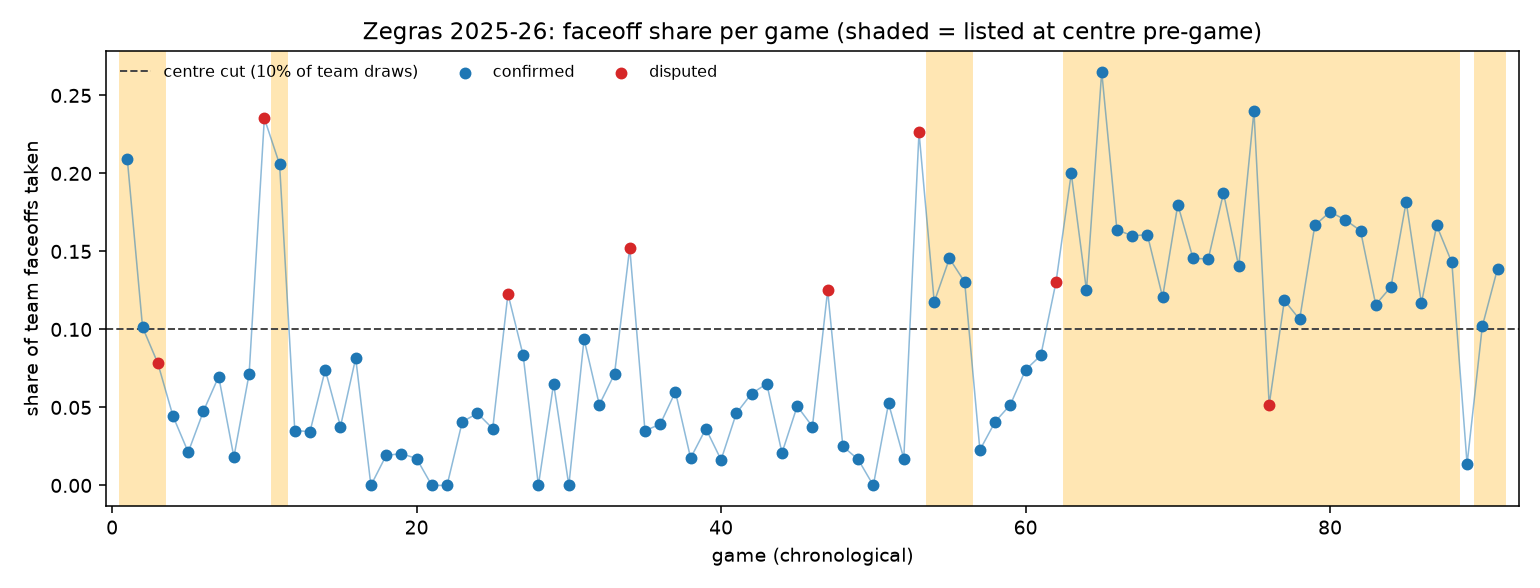
Before you can ask whether he's better at centre, you have to know which nights he played there. The data didn't say — so we built it, game by game, and we're publishing every row.
Remember Some Guys
A new daily puzzle: name the skater from the shape of their career.
Model v2: putting the players back in
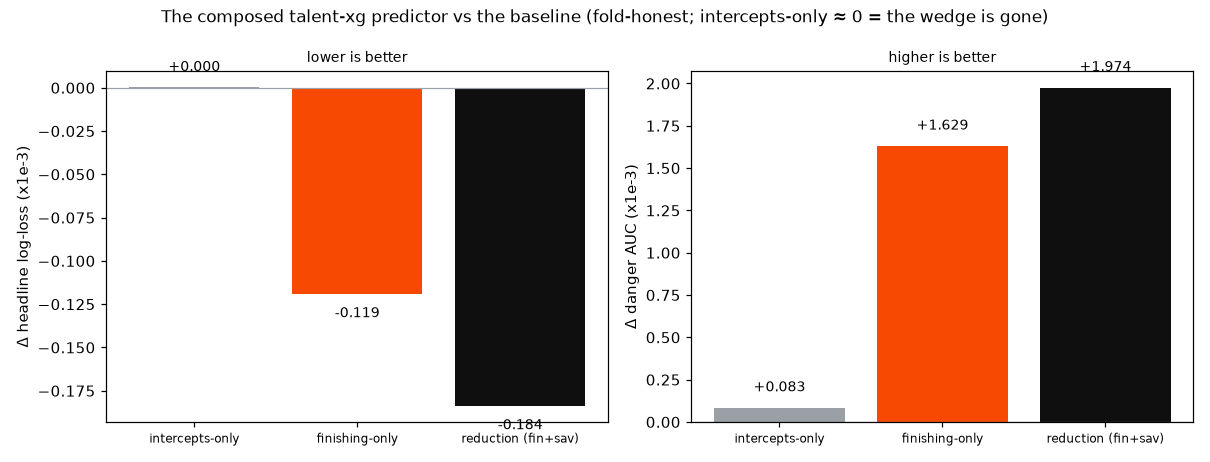
v1 was deliberately talent-blind. v2 gives the model shooters, goalies, and teammates — measures what that buys, and ends up scoring the site.
The talent-blind baseline
The model that scores every shot in the tables — its structure, the reasoning behind it, and its honest scorecard.